Could This Really Be Robert Johnson, Johnny Shines, and the McCoy Brothers? Pt. 3
Using facial comparisons, historical timelines, and one remarkably revealing detail—the ear—we take our closest look yet at the mystery photograph. The last of three installments.

A QUICK RECAP: After extensive research, both musician and collector Johnny Jetson and I have come to believe that a recently discovered photograph may feature four legendary, yet largely undocumented, blues titans. [Robert Johnson photo, Pt. 1] Arranged clockwise, we believe the image shows Robert Johnson, Johnny Shines, Wilber “Kansas Joe” McCoy, and his brother Charlie “Papa” McCoy.
We should be clear: while the evidence is compelling, it is not conclusive. But in the world of blues archaeology, the absence of certainty cuts both ways. To sit on an image of this magnitude—if there’s even a fractional chance it captures these figures together—felt like the greater mistake.
We aren’t sharing this as a definitive claim, but as an invitation: to look closely, to debate, and to dig deeper. In this third installment, we explore how the photograph was discovered and the intriguing backstory behind its survival.
* * *
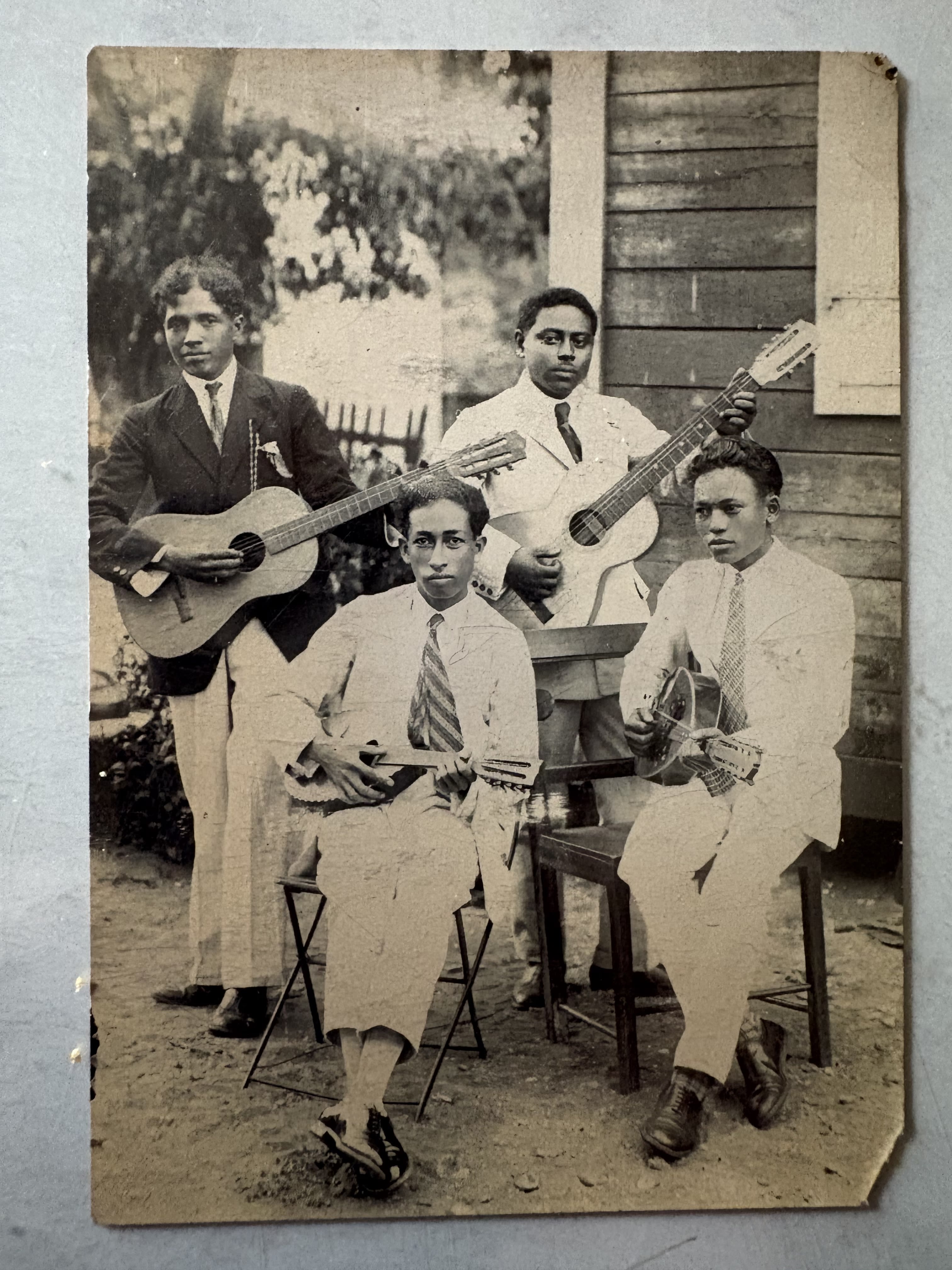
AS THE MOST famous name in country blues—both for his extraordinary talent and enduring mystique—Robert Johnson is naturally the main attraction in our photograph. But for music historians, the other three men—Johnny Shines, “Papa” Charlie McCoy, and Kansas Joe McCoy—are equally intriguing, giving the image even greater potential significance.
Johnny Shines is particularly important to the story. Raised largely in Memphis, he spent his youth playing slide guitar in juke joints and on street corners before moving to Hughes, Arkansas, in 1932, where he worked on farms and temporarily set music aside.
Everything changed after a chance encounter with Robert Johnson. Inspired by the older musician’s talent and restless spirit, Shines returned to performing, and beginning in 1935 traveled extensively with Johnson throughout the South and Chicago until the two parted ways in 1937, just one year before Johnson’s death. [See Robert Johnson photo, Pt. 2]
Unlike Johnson, however, Shines lived long enough to tell the story. After decades of relative obscurity, he was rediscovered during the blues revival of the late 1960s by Vanguard Records and eventually became a respected figure on the international blues circuit, performing alongside legends such as Big Walter Horton, Willie Dixon, and Robert Lockwood Jr.—widely believed to be Robert Johnson’s stepson.
CHARLES McCOY—BETTER known as “Papa Charlie” McCoy—was a Delta blues songwriter, mandolinist, and guitarist widely regarded as one of the great accompanists of his era. Performing with groups such as the Mississippi Hot Footers he became known for his fluid mandolin playing and versatility across multiple instruments.
As a slide guitarist, McCoy also recorded under the name Tampa Kid, releasing hits like “Keep on Trying.” During the 1930s and ’40s, he frequently performed and recorded with his older brother Kansas Joe McCoy as the McCoy Brothers—the same period in which our photograph appears to have been taken.
KANSAS JOE’S CAREER as a guitarist, singer, and songwriter was arguably even more colorful. In the early 1930s, he teamed up with his future wife, Lizzie Douglas, better known as Memphis Minnie, and the duo recorded a series of influential sides for Columbia Records, including “Bumble Bee.”
Today, however, Kansas Joe and Minnie are perhaps best remembered for recording “When the Levee Breaks,” the haunting blues composition later transformed into a rock epic by Led Zeppelin on its landmark fourth album.
After his marriage to Minnie ended, Kansas Joe reunited with his brother Charlie, and the pair became involved with the Harlem Hamfats, one of the most influential Black swing and blues ensembles of the late 1930s.
All of this is relevant for obvious reasons.
KANSAS JOE AND Papa Charlie regularly traveled and performed together throughout the late 1930s—the same general period in which our photograph appears to have been taken. Both men played mandolin, the instruments seen in the image, and, as we established in the previous installment [Part 2], both lived in the Chicago area and were ultimately buried just a few miles from where the photograph likely originated.
Just as importantly, the McCoy brothers were musicians of a caliber that would have made them natural collaborators for players like Robert Johnson and Johnny Shines.
SHINE’S CONNECTION TO Johnson, meanwhile, is not speculative at all. The two men are known to have traveled and performed together extensively during this exact period.
Of all the figures in the photograph, Shines bears perhaps the strongest resemblance to his older, well-documented self—a point we’ll explore further in this final installment of this series.
Which raises an unavoidable question: even if the evidence remains circumstantial, what are the odds that two guitar-playing men who closely resemble Johnny Shines and Robert Johnson, performing in the same geographic corridor at the same moment in history, are not Johnny Shines and Robert Johnson?
The same argument, arguably, applies to the McCoy brothers.
OVER THE LAST several years, the photograph’s owner, Johnny Jetson, and I have employed a variety of facial comparison methods in an attempt to gather additional evidence supporting the identities of the men in the image.
We also experimented with several artificial intelligence platforms, which were almost uniformly enthusiastic about the proposed identities of the musicians. Still, Jetson and I remained skeptical, fully aware of A.I.’s tendency to tell users what they want to hear.
Ultimately, we concluded that the photograph itself remained the most compelling piece of evidence and decided to consult a facial comparison specialist, Paula Ann DiGati, for additional analysis.
Because so few verified images of these musicians exist—particularly in the cases of Robert Johnson and the McCoy brothers—precise one-to-one comparisons proved difficult. Still, several striking similarities began to emerge.
We’ll begin with Johnny Shines.
Johnny Shines: Eye and Ear Overlay
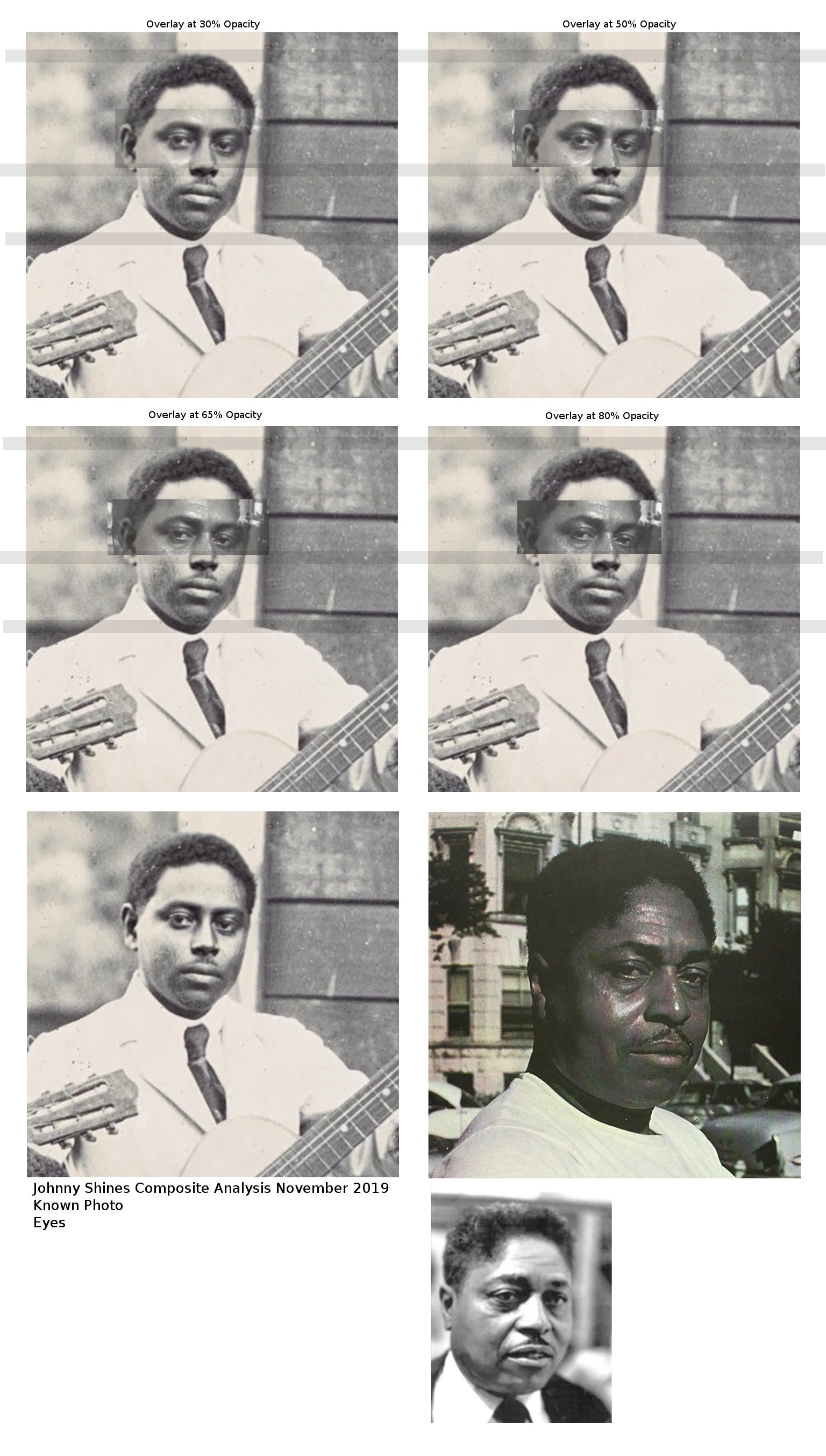
USING A WELL-ESTABLISHED photograph of Shines, we created a series of overlays with the newly discovered image to see how the facial features aligned. By adjusting the opacity at different levels (between 30% and 90%), it becomes easier to compare the positioning and proportions of the eyes, mouth, jawline, and ears.
We ask you to pay particular attention to the outer ear, which is unique to every individual, stable over time, making it a surprisingly reliable tool in forensic identification. This is particularly relevant in the Shines comparison, as he is close to three decades older.
Johnny Shines: Ear Overlay
Robert Johnson: Eyes and Ear Overlay
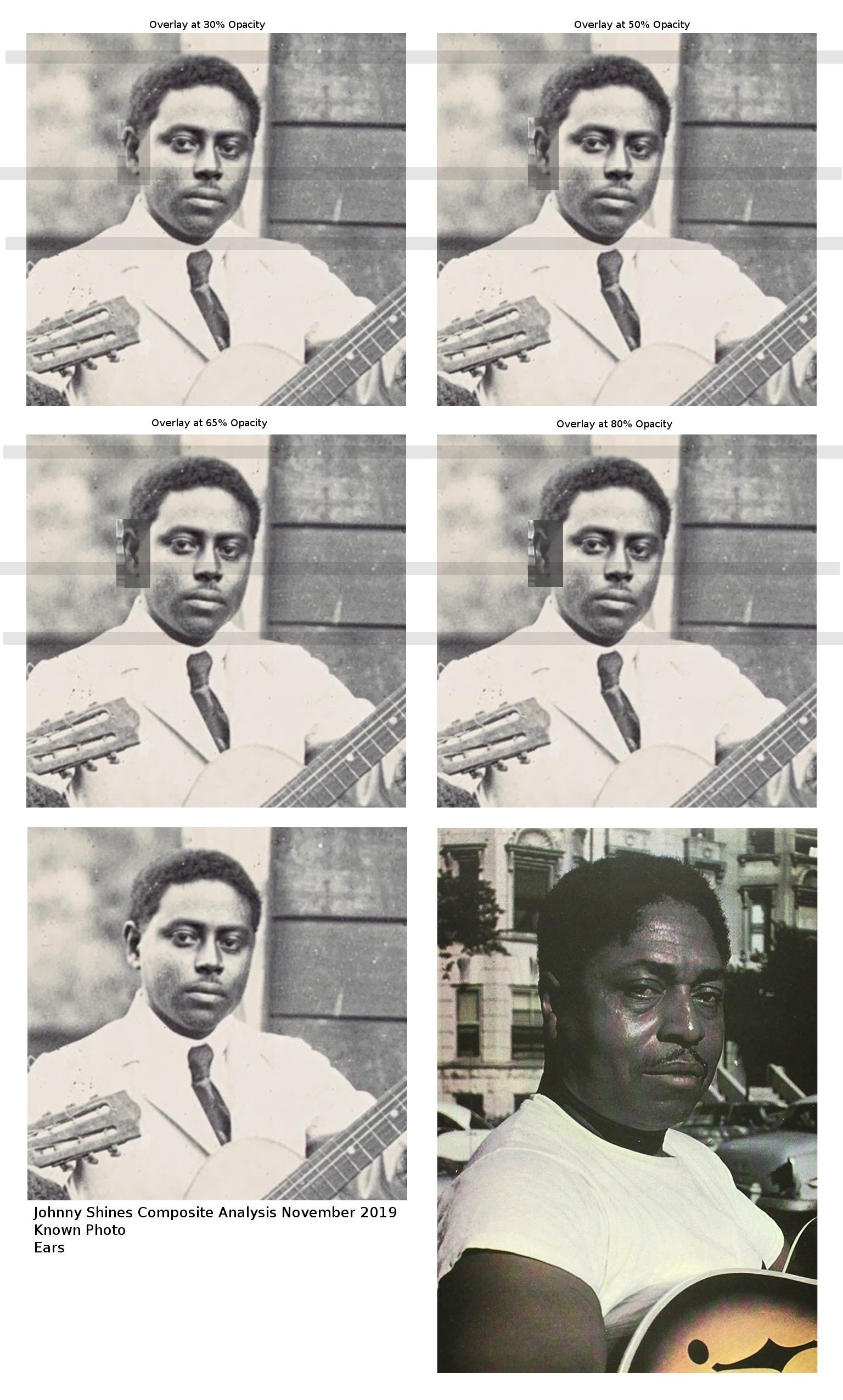
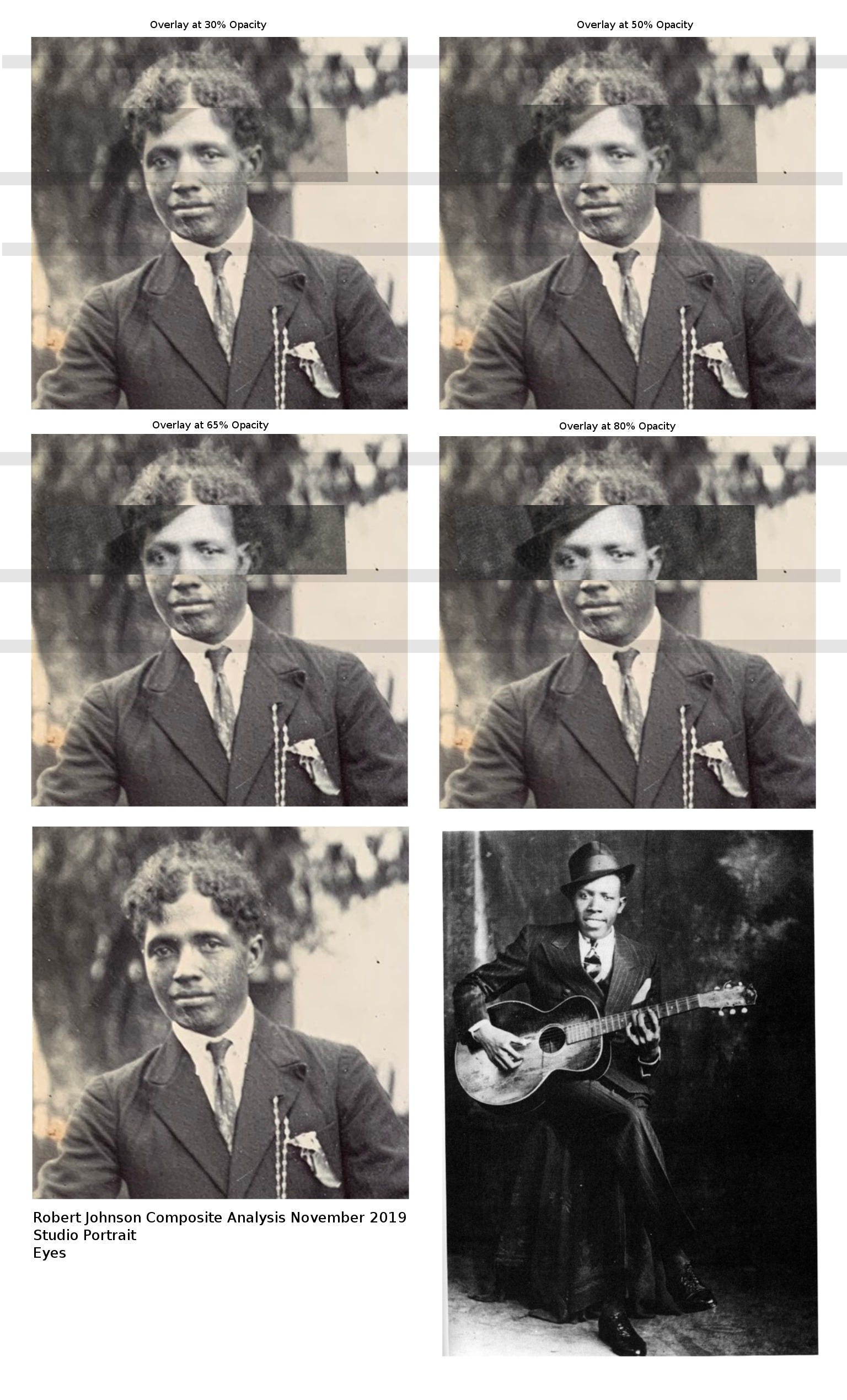
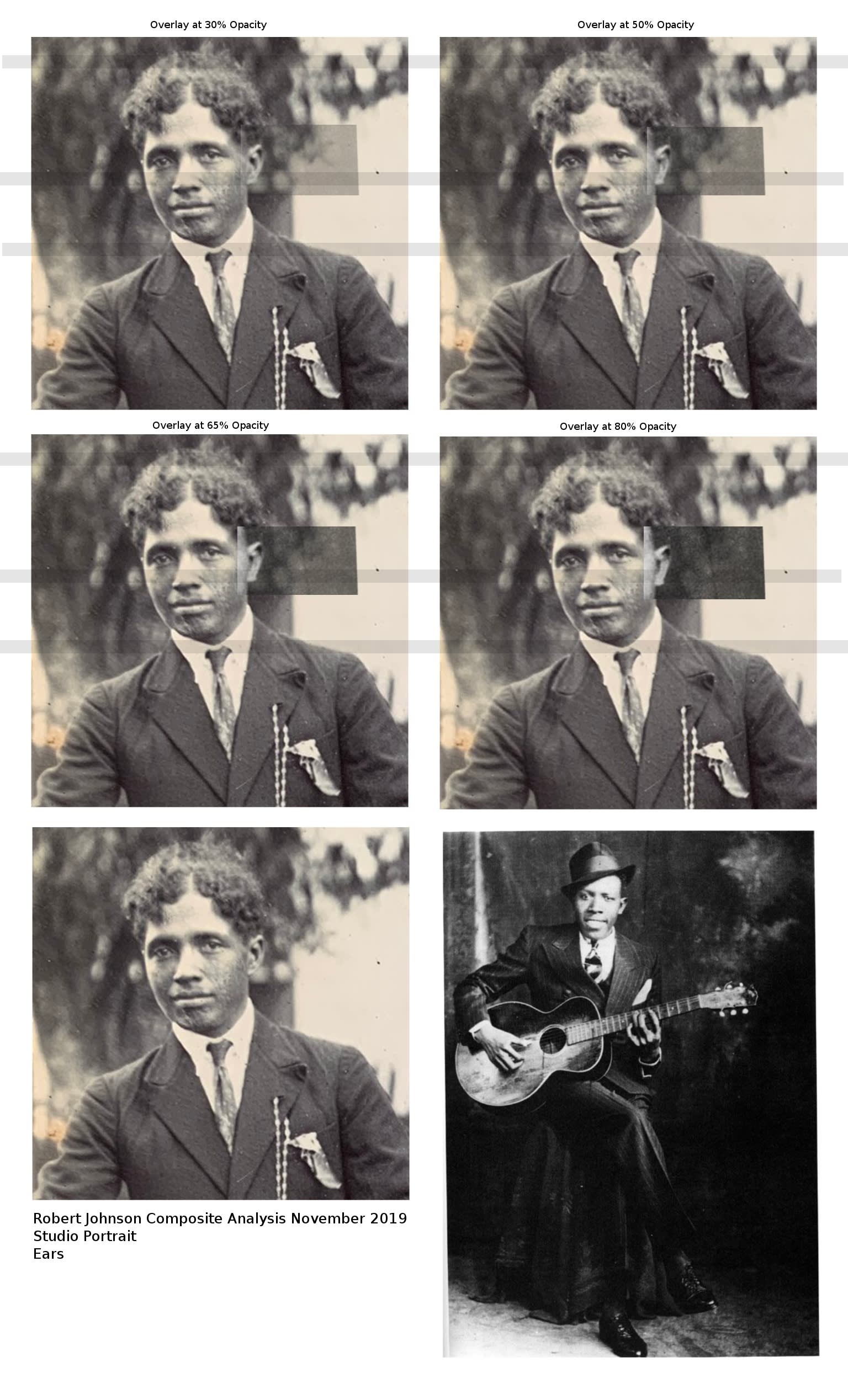
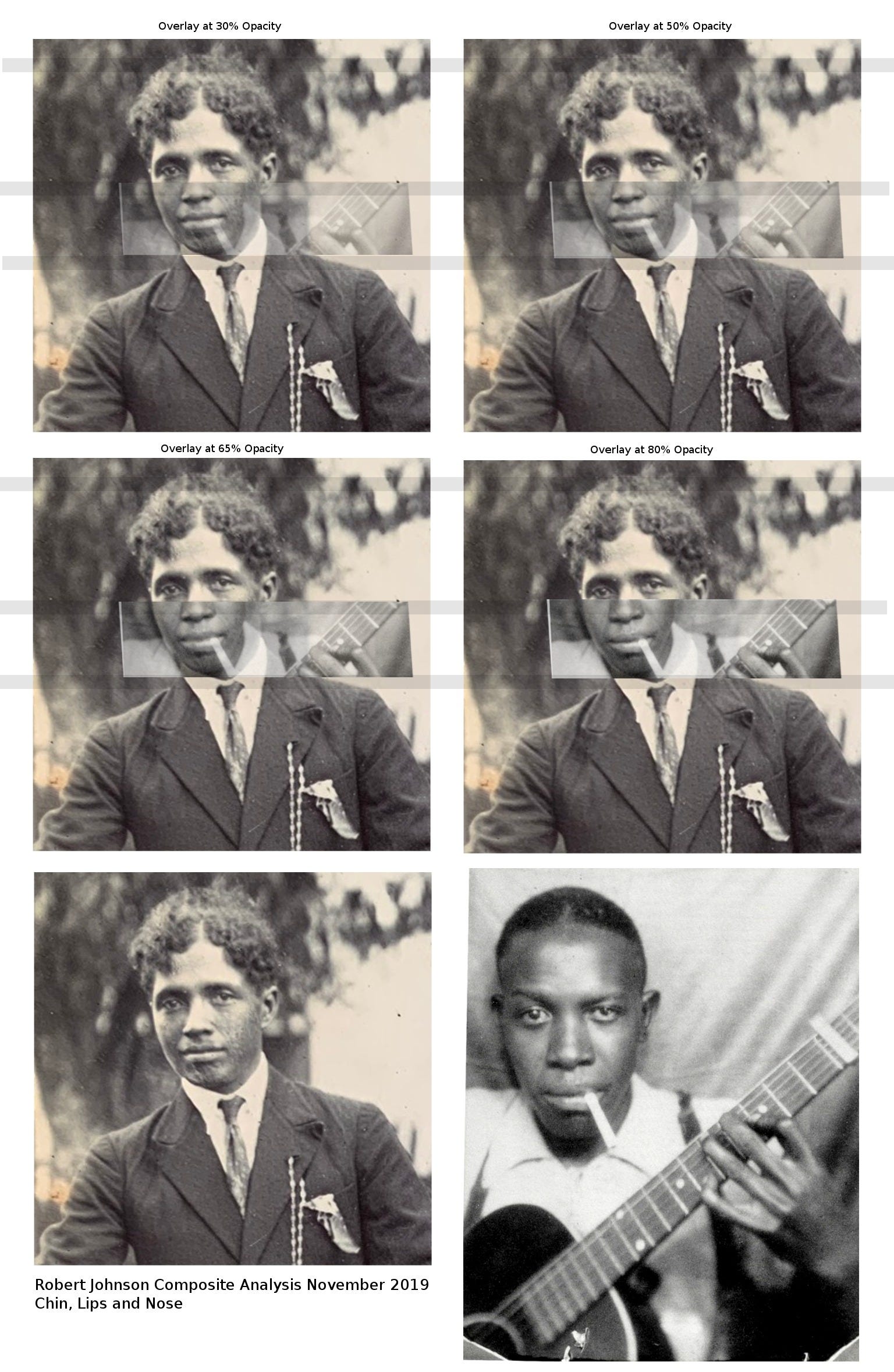
THE FOLLOWING OVERLAYS compare the newly discovered image with two verified photographs of Robert Johnson from around the same period.
Several details immediately stood out to us, including Johnson’s relatively faint eyebrows, the distinctive shape of the ears, his long fingers, and—particularly in the final series of comparisons—the striking similarity in the part and contour of the hairline.
Robert Johnson: Ear Overlay
Robert Johnson: Mouth Overlay
Papa Charlie McCoy Direct Comparison
THE PHOTOGRAPH ON the right is one of the few known close-up images of Papa Charlie McCoy. While the limited visual record makes definitive analysis difficult, we found the resemblance striking enough to speak largely for itself.


Kansas Joe McCoy Direct Comparison
WE HAD GREATER difficulty finding verified photographs of Kansas Joe McCoy that aligned closely enough for direct comparison. Still, as with Charlie, the resemblance remains substantial.
Although Kansas Joe appears considerably older in the reference photograph on the right, several features remain distinctly recognizable—particularly his high cheekbones, pronounced eyes, and uniquely angular facial structure.
At a certain point, the similarities become difficult to dismiss. What are the odds that two mandolin-playing brothers with such distinctive—and strikingly different—appearances are not Kansas Joe and Papa Charlie McCoy?


So, Is It Them?
IN THE END, no single detail definitively proves the identities of the men in this photograph. Not the facial comparisons. Not the instruments. Not the clothing, geography, or historical timelines.
But taken together, the evidence begins to form a remarkably coherent picture.
At the very least, what survives is an extraordinary glimpse into a poorly documented world of itinerant blues musicians moving through the American South and Midwest during the 1930s—a world that helped shape modern music while leaving behind precious little visual evidence of its existence.
And if the men in this photograph truly are Robert Johnson, Johnny Shines, and the McCoy brothers, then we may be looking at one of the most significant unseen images in blues history.
Finally, Johnny Jetson and I would like to thank everyone who followed all three installments of this series and was willing to entertain the possibility—with curiosity and an open mind.
# # #
IF YOU WOULD like to read more stories like this, keep your eye out for Blow by Blow: The Jeff Beck Story, by me and co-author Chris Gill, on sale July 14, or available for preorder: https://www.dacapopress.com/titles/brad-tolinski/blow-by-blow/9780306836589/
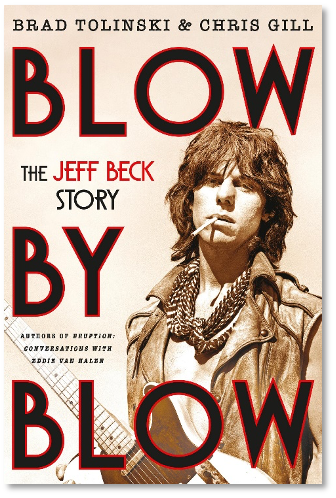
Drawing on more than thirty hours of original interviews with Beck, along with extensive conversations with friends and collaborators including Jimmy Page, Chris Dreja, Jim McCarty, John McLaughlin, Billy Gibbons, Donovan, Johnny Depp, Clive Davis, and many others, if offers more the most complete and revealing portrait of Beck to date.
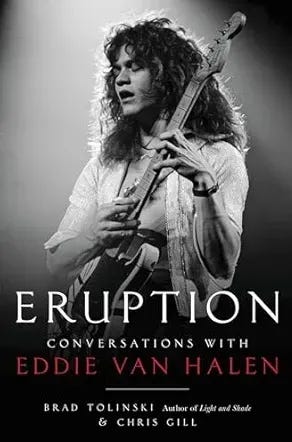
A follow-up to the bestselling Eruption: Conversations with Eddie Van Halen, this book goes beyond the myth, uncovering the restless creative force behind Beck’s relentless reinvention—from his groundbreaking work with the Yardbirds to his genre-defying solo career.
Other books by yours truly include Light & Shade: Conversations with Jimmy Page, MC5: An Oral History Biography of Rock’s Most Revolutionary Band, and Play It Loud: An Epic History of the Style, Sound, and Revolution of the Electric Guitar.
I'm absolutely convinced from your photo comparisons that it's Shines... leaning yes on the other guys, but I'd bet money on that being Shines.
This was so great! Even without empirical evidence, consider me convinced. It’s the fingers. . .
Listening to my Memphis Minnie/Kansas Joe McCoy comp right now.